

The Day I Lost My Spark: The Writer Who forgot how to write
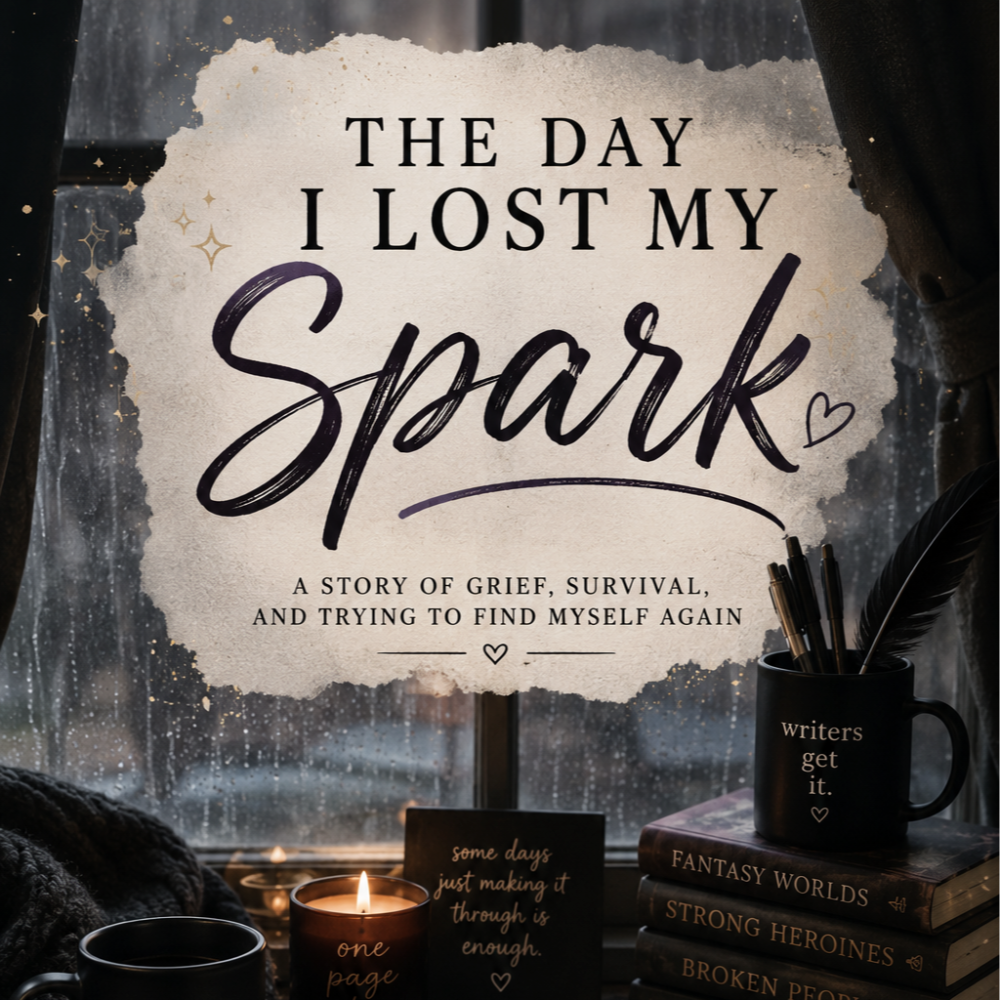
There are moments in life that define everything into a before and an after.
For me, that moment happened on February 26, 2026.
It was the day my husband was involved in a devastating motorcycle accident.
What makes that day even harder to process is that I wasn’t receiving a phone call about the accident. I wasn’t arriving at the scene afterward. I wasn’t hearing about it from someone else.
I was there.
I was driving directly behind him when it happened.
One moment, we were traveling down the road like any other day on our way to the gas station, and the next, I watched the entire accident unfold right in front of me.
Some images never leave you.
No matter how much time passes.
No matter how hard you try to push them away.
They stay with you.
I still see those images. I still replay those moments.
I still find myself wondering how life can change so dramatically in a matter of seconds.
People often talk about the person who experienced the accident. They talk about their injuries, their recovery, and their healing journey.
What people don’t talk about enough is the trauma experienced by the loved ones who witness it.
The spouses.
The caregivers.
The family members whose lives change instantly too.
That day changed both of us.
And in many ways, it changed who I was.
When Survival Becomes Your Full-Time Job
After the accident, life became a blur of hospital visits, doctor’s appointments, paperwork, financial stress, and uncertainty.
As my husband began his recovery journey, I stepped into multiple roles I never expected to have all at the same time.
I became the sole provider for our family.
I became a caregiver.
I became the person responsible for making sure everything continued moving forward.
I still had four children who needed their mom.
Bills still needed to be paid.
Meals still needed to be cooked.
Laundry still needed to be washed.
Life didn’t pause simply because ours had been turned upside down.
There wasn’t time to sit and process what had happened.
There wasn’t time to fall apart.
There wasn’t time to grieve the life we had before.
There was only time to survive.
And so that’s what I did.
Day after day.
Week after week.
Month after month.
I put one foot in front of the other and did whatever needed to be done.
But somewhere along the way, I lost pieces of myself.
How Trauma Affected My Creativity
Before the accident, writing was a huge part of who I was.
I wasn’t just someone who enjoyed writing.
I was a writer, I had stories to tell, dreams I was working toward, books I wanted to finish.
Ideas that excited me.
Writing wasn’t just a hobby; it was part of my identity.
But after the accident, something changed.
Every time I sat down to write, my mind felt empty.
Or worse, it felt loud. All of my racing thoughts would fight each other to be the loudest.
The words wouldn’t come.
The creativity wasn’t there.
The inspiration I had once relied on seemed completely gone.
I kept opening my laptop.
I kept staring at blank pages.
I kept trying.
But every attempt ended the same way.
Frustration. Doubt. Silence.
I started questioning everything.
“Was I ever really a writer?”
“Had I just been pretending?”
“Was I an imposter all along?”
The Battle With Imposter Syndrome
One of the hardest parts of recovering from trauma has been battling the voice in my head that constantly tells me I’m not good enough.
Not a good enough writer.
Not a good enough business owner.
Not a good enough mother.
Not a good enough wife.
Not a good enough anything.
Trauma has a way of shaking your confidence.
It doesn’t just affect your circumstances.
It affects how you see yourself.
For months, I convinced myself that because I wasn’t writing, I wasn’t a writer anymore.
Because I wasn’t creating, I wasn’t creative.
Because I was struggling, I somehow felt like I was failing.
Looking back now, I realize how unfair I was being to myself.
I was expecting myself to create while I was still trying to survive.
I was expecting inspiration while carrying enormous amounts of stress, grief, fear, and responsibility.
I was expecting normal productivity during one of the most difficult seasons of my life.
The Hidden Side of Caregiver Burnout
One thing I’ve learned through this experience is that caregiver burnout is real.
When someone you love is injured, you naturally focus on them.
You focus on helping them heal.
You focus on their needs.
You focus on their recovery.
What often gets overlooked is your own mental and emotional well-being.
You become so focused on taking care of everyone else that you stop checking in with yourself.
I stopped asking myself how I was doing.
I stopped making time for things I enjoyed.
I stopped prioritizing my own mental health.
Not intentionally.
It just happened.
The days became about responsibilities instead of passions.
About survival instead of joy.
About getting through the day instead of looking forward to it.
And eventually, I realized I wasn’t just exhausted.
I was disconnected from myself.
Learning How to Heal After Trauma
Healing hasn’t happened all at once. I am still in my healing journey to this day.
There wasn’t a magical moment where everything suddenly felt okay again.
There wasn’t a day when I woke up and felt completely like myself.
Instead, healing has come in small steps.
Tiny moments.
Little victories.
Some days healing looks like getting out of bed.
Some days it looks like allowing myself to cry.
Some days it looks like talking about what happened.
And some days it looks like simply admitting that I’m struggling.
For a long time, I thought healing meant becoming the person I was before the accident.
Now I realize that’s probably not possible.
Life changes us.
Trauma changes us.
The goal isn’t to go backward.
The goal is to move forward.
Why Reading Helped Me Find Inspiration Again
One of the first signs that I was beginning to reconnect with myself was when I started reading again.
For months, concentrating on a book felt impossible.
I’d read the same page three times and still have no idea what I had just read.
My mind was constantly elsewhere.
But recently, something shifted.
I started picking up books again.
Slowly.
One chapter at a time.
One page at a time.
And something wonderful happened.
The stories started pulling me in again.
I found myself becoming invested in characters.
Getting excited about plot twists.
Feeling inspired by other authors.
Reading reminded me why I wanted to become a writer in the first place.
It reminded me of the magic that stories can create.
It reminded me that creativity wasn’t gone.
It was simply buried beneath months of stress and trauma.
The Power of Journaling Through Difficult Emotions
Another thing that has helped me tremendously has been journaling.
Not writing a novel. Not creating content. Just writing honestly.
Writing about my fears. Writing about my grief. Writing about my anger. Writing about my exhaustion. Writing about the things I don’t always say out loud.
Journaling has become a safe place for me to process emotions that I’ve been carrying for months.
Sometimes the words come easily.
Sometimes they don’t.
But every time I put my thoughts on paper, I feel a little lighter.
A little clearer.
A little more connected to myself.
I’ve learned that not all writing has to be productive.
Sometimes writing simply needs to be healing.
Finding My Spark Again
The truth is, I haven’t completely found my spark yet.
Not all of it.
But I can see pieces of it returning.
I see it when I get excited about a book.
I see it when a story idea pops into my head.
I see it when I sit down to journal.
I see it when I start imagining future projects again.
The spark isn’t blazing yet.
But it’s glowing.
And after everything that’s happened, that’s enough.
Because healing isn’t about becoming who you used to be.
It’s about discovering who you are now.
It’s about learning how to carry your experiences without letting them define you.
It’s about rebuilding yourself piece by piece.
To Anyone Who Feels Lost Right Now
If you’re reading this because you’ve experienced trauma, caregiver burnout, grief, or a life-changing event, I want you to know something.
It’s okay if you’re not the same person you were before.
It’s okay if you’re struggling.
It’s okay if your creativity has disappeared for a while.
It’s okay if you’re still figuring things out.
Healing isn’t linear.
Growth isn’t always visible.
And finding yourself again takes time.
I’m still on that journey myself.
Some days are harder than others.
Some memories still hurt.
Some doubts still creep in.
But for the first time in a long time, I can see glimpses of hope.
I can feel pieces of myself returning.
I can imagine a future that includes more than just survival.
I don’t have all the answers.
But I know this:
I survived one of the hardest seasons of my life.
And now, little by little, I’m learning how to live again.
Maybe that’s what finding your spark really is.
Not becoming who you were before.
But discovering who you’re meant to be after the fire.
Until next time…
